

In Houston, comfort isn’t one-size-fits-all. Your guestrooms demand whisper-quiet sleep, ballrooms swing from empty to packed, and kitchens, pools, and glass-lined lobbies deliver different conditions, usually on the same day. Here’s how Houston’s climate and operating realities shape a good HVAC strategy:
Aim for dry comfort (dehumidify without overcooling) so rooms feel crisp, not clammy. Better sleep, fewer complaints, happier reviews.
Kitchens dump heat and moisture, curtain walls spike solar gain, ballrooms and pools have their own rules. Zoning and purpose-built ventilation keep one space from wrecking another.
Low sound in guestrooms is non-negotiable. Discreet, ceiling-integrated options keep premium spaces beautiful while doing serious work behind the scenes.
24/7 operations mean controls, alarms, and redundancy that maintain consistent guest experiences across properties. No surprises, no downtime.
After-hours waste and rogue setpoints add up fast. Smart schedules, guardrails, and portfolio reporting tighten energy spend and support ESG goals.
Corrosion-minded equipment, coatings, and fastener choices extend life in Gulf air. Protecting finishes, performance, and budget.
Whole-building conditioning for ballrooms, kitchens, and lobbies, paired with robust DOAS/ERV strategies so you dehumidify without overcooling. BAS integration for alarms, trends, scheduling, and portfolio reporting. Excels with consistent base loads and larger back-of-house areas where airflow and ventilation controls drive results.
Zone-level precision in guestrooms, corridors, meeting rooms, and lounges. Room-by-room comfort that tracks actual occupancy. Quiet cassettes & concealed ducted units keep the design clean. Ideal for rapid TI/refresh work with minimal disruption. Suite-level control within guardrails preserves brand standards while letting staff fine-tune comfort.
Central for cores/common spaces (lobbies, ballrooms, kitchens). VRF/ductless for guestrooms, executive floors, and problem zones with tricky exposures. Minimizes after-hours waste by conditioning only the suites or wings in use. Common areas stay on smart schedules. Supports phased retrofits and brand conversions. You can modernize floor by floor and stay open the whole time.
See the whole property (or the whole portfolio) from one clean dashboard. Centralize alarms, trends, schedules, and setpoints across guestrooms, kitchens, ballrooms, pools, and back-of-house spaces - with secure remote access for managers and approved service partners. Comprehensive system insight highlights outliers, humidity drift (hello, Houston), and units trending toward failure so you can fix issues before they impact your reviews. Need proof? The BAS stores audit-ready logs for comfort, IAQ, and energy reports
Condition the spaces that are actually in use. Tie HVAC to PMS/keycard activity, door sensors, or booking data so rooms shift automatically between occupied, vacant, and deep-setback modes. For late check-outs, VIPs, or pop-up events, staff can trigger clean overrides that time out automatically and, for multi-property operators, can be captured and billed where applicable. Ballrooms get one-tap presets for setup, events, and teardown. Kitchens follow hood and makeup-air schedules without guesswork.
Give properties simple, bounded controls, and give corporate peace of mind. Temperature ranges, humidity targets, and IAQ standards are enforced by brand templates, so the in-room experience feels consistent whether guests are in the Galleria or by the coast. Exceptions trigger polite alerts, seasonal playbooks publish in a click, and energy targets stay visible so everyone rows in the same direction. The result: fewer comfort calls, cleaner data, and operations that run like your brand promises.

Bring in the right amount of outside air with DOAS/ERV. Meet code and comfort targets without overcooling. Smart heat and moisture exchange keeps lobbies lively, ballrooms steady, and guestrooms dry even when Houston’s humidity spikes.
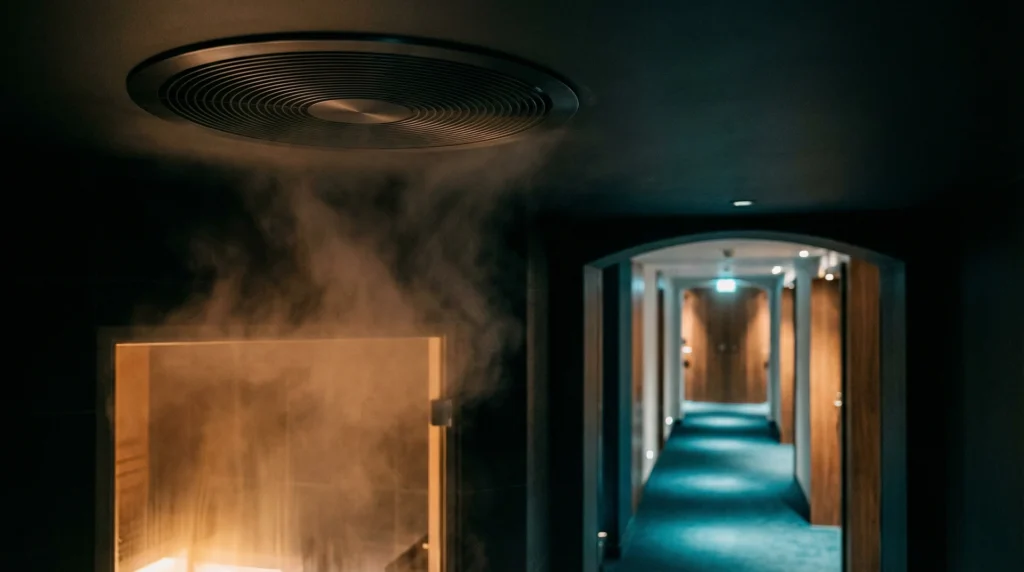
Move contaminants out at the source. Targeted exhaust for kitchens, restrooms, and spa/steam areas removes heat, odors, and moisture before they migrate, protecting dining rooms, corridors, and suites from unwanted smells.

Hold pressure like a pro. Maintain air flows the way you intend (ex. kitchens slightly negative to dining, pools managed so chlorine stays put, guestrooms buffered from corridor odors). The result: fewer complaints and callbacks.

Filter what remains. Use high-efficiency filtration sized to your equipment, with optional purification for brand standards and perceived air quality. Better sleep, fewer ‘stuffy room’ comments, and cleaner coils over time.

Trust the data. Your BAS tracks humidity, temp, ventilation rates, and pressure with trends and alerts for drift. Export logs for brand QA, ESG reporting, and audits, and spot small anomalies before they become weekend crises.
Different spaces require different playbooks. Here’s how our dealers typically target comfort, humidity, and acoustics across a modern hotel, without tripping up operations or design.
Guestrooms that sleep quietly, ballrooms that scale for events, and back-of-house operations that stay cool under pressure. Plus pool/spa humidity control that protects finishes.
Lean, reliable comfort with simple room-level controls, low sound, and scheduling that trims after-hours runtime without hurting the guest experience.
Discreet, design-friendly indoor units and fine zoning for suites, lounges, and rooftop bars. Comfort that complements the aesthetic instead of competing with it.
Fast warm-up/cool-down, quiet operation for speeches, and BAS scheduling to match load swings from empty to packed in minutes.
Coordinated strategies for shared walls and stacked uses - makeup air and pressure balance for kitchens, steady comfort for storefronts, and serene hotel rooms above it all.
From whisper-quiet guestrooms to load-responsive ballrooms and spa-level dehumidification, our dealers will help you design a solution that delights guests and trims operating costs. Start with your zip code to connect with local installers and build a right-fit plan.