
Create spaces where patients want to receive care – without watching energy costs spike. Houston Trane connects you with local installers and right-fit Trane and Mitsubishi systems. Add modern, connected controls, and you’ll see comfort and operations clearly across one location or an entire portfolio.

Houston’s climate and 24/7 care environments raise the bar for HVAC. The goal isn’t just cool air. It’s dry comfort, stable pressure, clean ventilation, and systems that don’t blink when loads change or the clock strikes midnight.
Dehumidify without overcooling. Target lower indoor RH so rooms feel dry while maintaining setpoints. Inverter-driven equipment and DOAS/ERV strategies help wring out moisture without turning spaces into refrigerators.
Keep the correct pressure balance between rooms so contaminants, odors, and airborne particles stay contained. Maintain proper negative/positive pressures to avoid odor and contaminant migration, especially in isolation rooms, procedure areas, and pharmacies.
ORs, imaging suites, and recovery areas don’t heat and cool at the same rate, and they don’t rest. Design for variable heat gains, rapid recovery, and overnight modes that meet targets without wasting energy.
Work must happen around care. Infection control, dust and noise limits, clean tie-ins, and phased downtime keep clinics open and patient flow moving. Quiet, compact indoor units make ceiling and corridor work cleaner.
Every kWh and report matters. Right-sized outside air, verified filtration, and trend logs support audits, while smarter scheduling and zoning keep energy spend in check.
When you’re conditioning entire buildings and managing serious ventilation, central wins. Think large AHUs, stable temps, and dedicated outdoor air that hits code without overcooling. Build in redundancy where it matters most - common areas, critical zones - and let the BAS shoulder alarms, trend logs, and a clean audit trail. It’s the backbone for reliability and compliance.
Need surgical control and fast turnaround? VRF/ductless shines in clinics, MOB suites, imaging support rooms, and admin areas. Quiet cassettes and concealed ducted units protect aesthetics and privacy. Temperature adjustments are allowed, but only within safe, preset ranges. Best of all, tenant improvements are cleaner and quicker with minimal disruption.
Use central where uptime and ventilation are non-negotiable, then layer VRF/ductless for suites, expansions, after-hours wings, or stubborn hot/cold pockets. You’ll right-size the central unit, phase work floor by floor, and keep neighbors operational, without overspending on capacity you don’t need. Avoids oversizing the central unit while improving comfort and control.
One dashboard for alarms, trends, setpoints, and schedules across buildings and suites. Remote access for quick corrections and fewer truck rolls. Role-based permissions so clinical and admin teams see exactly what they need.
Continuous trend logs for temperature, humidity, pressure, and air changes. Exportable, timestamped reports to support surveys, audits, and incident reviews. Alerting and acknowledgments that capture who did what and when.
After-hours setback and recovery sequences that cut waste without risking comfort. Isolation and procedure modes with predefined airflow and pressurization targets. Clean, auditable overrides that revert automatically to standards.
Suite-level control for providers, within corporate- or owner-set boundaries. Standardized setpoint ranges protect energy budgets and patient experience. Simple, staff-friendly interfaces to reduce drift and service calls.
With remote access, you can adjust setpoints, investigate alarms, and coordinate with service providers without always being on site. That means fewer emergency drives to the plant for minor tweaks and more time spent preventing problems instead of chasing them.
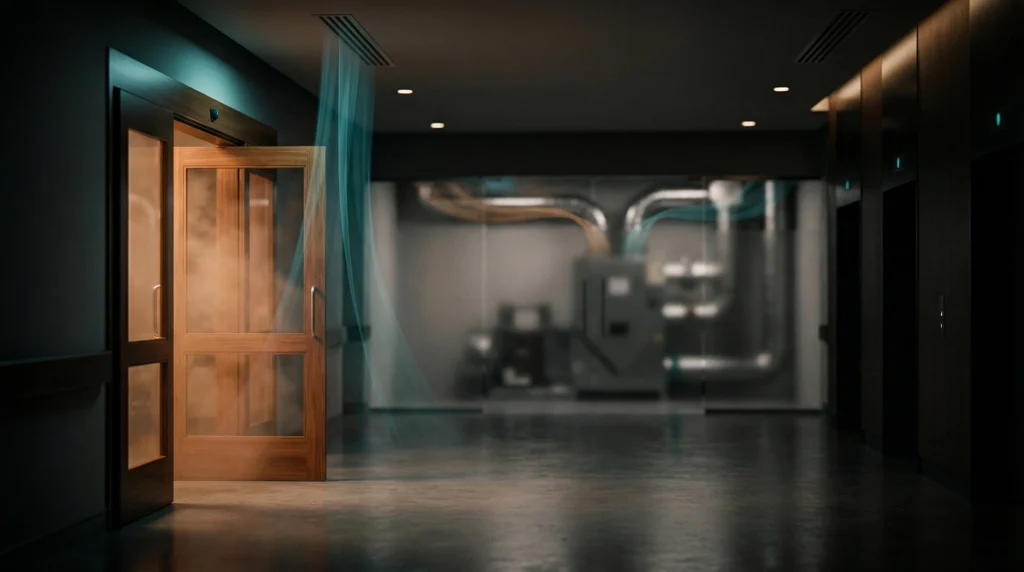
DOAS/ERV solutions are sized for code and climate, so you meet ventilation targets without overcooling. Heat/energy recovery to tame Houston humidity. Stable dry comfort that improves patient experience and helps equipment perform.
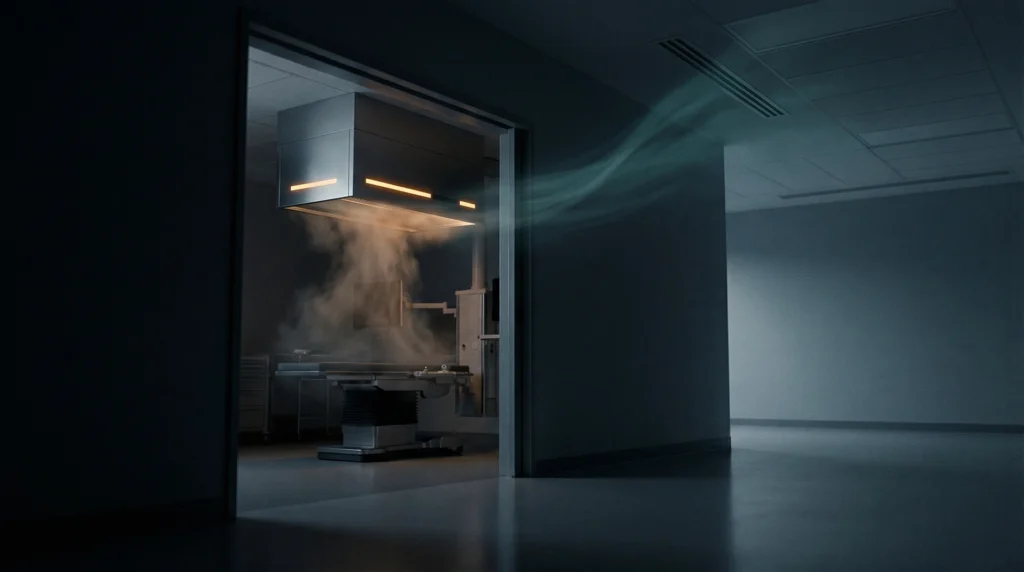
Targeted exhaust from procedure rooms, labs, pharmacies, and restrooms to limit cross-contamination. Coordinated makeup air so capture stays consistent during peak and off-hours. Sequenced runtimes that align with schedules and clinical workflow.
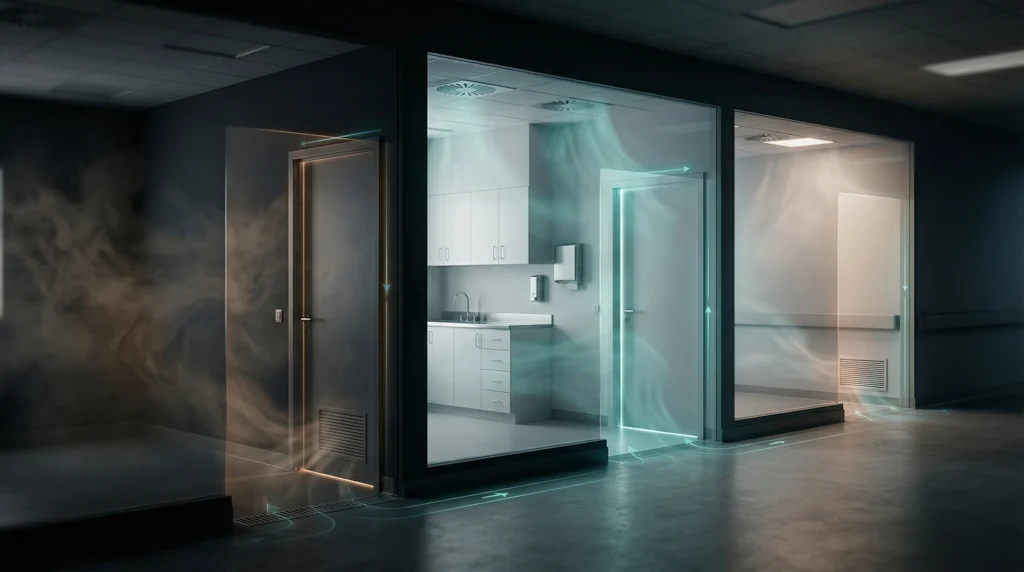
Clear positive, negative, and neutral room strategies: isolation, clean supply, and general areas. Trim-balanced airflows with measured setpoints to prevent drift as loads change. Door swings and transfer pathways are accounted for.
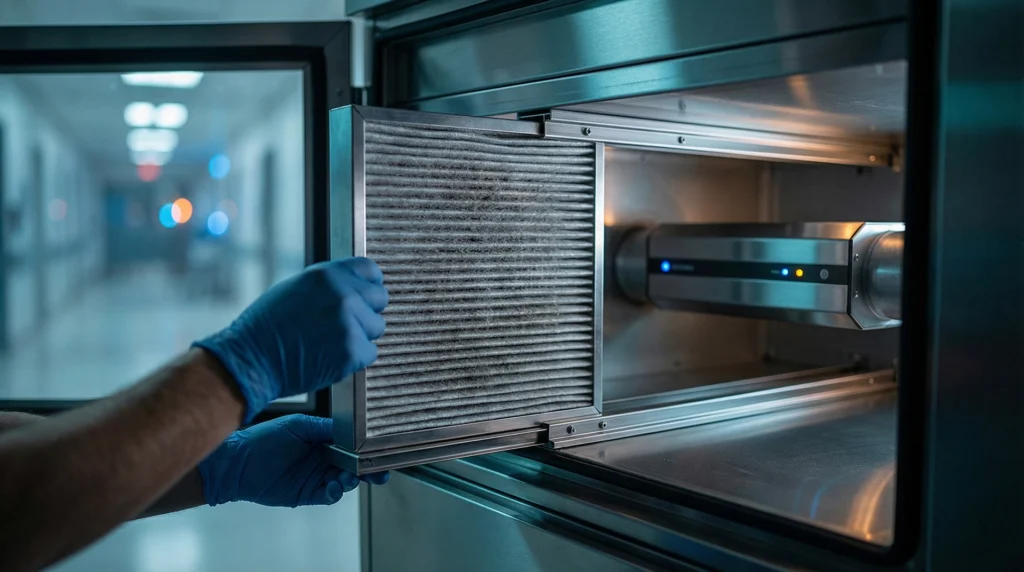
High-efficiency filtration matched to room function and system capability. Optional in-duct purification strategies where risk or policy warrants. Maintenance-friendly access so filters get changed on time, every time.
Live trends for temperature, humidity, and pressure. Visible at the BAS and zone level. Alerts for out-of-range conditions with timestamped acknowledgments and notes. Exportable reports for surveys and audits, so compliance isn’t a fire drill.
A hospital isn’t one building. It’s a collection of very different spaces with specific needs. Here’s how our dealers typically design for each area to balance comfort, compliance, and functionality in Houston’s heat and humidity.
Tight control of temperature, humidity, and pressurization by zone. Robust ventilation (DOAS/ERV) and filtration strategies that support compliance. BAS visibility for alarms, trends, and audit-ready reporting. 24/7 operations included.
Fast, clean retrofits with quiet indoor units and suite-level setpoints. Just the right amount of outside air without overcooling. Steady humidity for patient comfort. Flexible layouts that adapt as providers add rooms or shift services.
VRF/ductless zoning for tenant-by-tenant control within building guardrails. Discreet ceiling cassettes or concealed ducted units that preserve finishes. Phased build-outs to meet TI timelines without disrupting neighbors.
Low-sound operation and stable temperatures for restful recovery. Tamper-aware grilles/placements and simplified, staff-friendly controls. Ventilation and filtration are tuned to reduce odors and triggers.
Negative/positive room relationships are maintained and monitored. Precise temp/humidity for USP spaces and sensitive equipment rooms. Exhaust and makeup air are balanced to protect product integrity and staff comfort.
From patient towers to multi-tenant MOBs, our dealers help you design a solution that balances comfort, compliance, and cost and keeps care moving. Start with your zip code to connect with local installers and build the right-fit plan for your facility.